












Depression Guide: ADHD Anxiety Depression Symptoms, Help, Cause, Types, Treatment and Medication
Depression is a state of mind which is characterized by a negative sense of inadequacy and a visual lack of activity. It is a mental state in which the effecting person experiences sad feelings of gloom and downturn in mood, which may be relatively transitory and may be due to something complex. The common behaviour includes feelings of sadness, despair, low self-esteem, low self-reproach and discouragement.
Depression is a listed mental disorder which includes altered mood; it may occur daily associated with diminished interest or pleasure in most or all of the activities. Depression is like a tree that has many roots!!
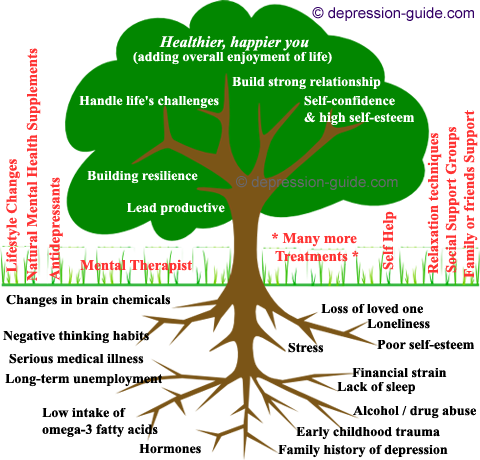
The depression-guide is devoted towards helping and assisting people who suffer from the depression, anxiety, adhd and related disorders. It also tries its best hand towards support resource for family, friends and loved ones in learning about depression and other anxiety attacks related disorders.
We have compiled and consolidated the latest information on depression (including anxiety, adhd) signs and symptom of depression, depression causes, diagnosis, and depression treatment and cure for teen, adult and child. We have also gathered important information on coping with the personal and social effects of a depression, which can become difficult without the proper knowledge. depression-guide has information on anxiety depression related disorders and medicine library, depression self help, depression support and health care professional, etc.
It is possible that an individual's episode of depression may be caused entirely by a major stressful situation or event. For others, stressors may 'set off' or trigger an episode that was 'waiting to happen'. Alternatively, a depressive episode may be completely unrelated to a stressful event. It is therefore not surprising that, in many written accounts of depression, the role of stressful events as a trigger is difficult to determine. Often, the explanations provided by therapists are just as speculative.
The key to depression recovery is to draw upon whatever energy and resources you do have. Start with small goals. You may not have much energy, but you probably have enough to take a short walk around the block or pick up the phone to call a loved one. Take your recovery day by day, be patient, and reward yourself for each accomplishment. Baby steps are fine. Put enough of them together and you’ll find yourself well on the way to getting out from under depression’s shadow.
Show the patient she's important by listening attentively and respectfully, preventing interruptions, and avoiding judgmental responses. Inform the patient that she can help ease depression by expressing her feelings, participating in pleasurable activities, and improving grooming and hygiene.
Anxiety and Depression Treatment Information
Depression, it is a line that slips off the tongue all too readily when we are bored or unhappy. But most of us, when we say that, do not mean we are clinically depressed, possibly wanting or needing treatment.
Depression - the blues can hit us all from time to time, as financial, emotional or work problems hang over like a dark cloud. In the long term, if the problems are not resolved, depression lowers the immune system, leaving you prone to a spiral of worstening mental and physical health.
Anxiety is a normal response to danger. Anxiety is abnormal when its severity is out of proportion to the threat of danger or when it outlasts the threat. Anxiety mood is closely coupled with somatic and autonomic components, and with psychological ones.
Depression is a normal response to loss or misfortune. Depression is abnormal when it is out of proportion to the misfortune or unduly prolonged. Depressive mood is closely coupled with other changes, notably a lowering of self-esteem, self-criticism, and pessimistic thinking.
While tending to the patient's psychological needs, don't forget her physical needs. If she's too depressed to take care of herself, help her with personal hygiene. Encourage her to eat. If she's constipated, add high-fiber foods to her diet; offer small, frequent meals; and encourage physical activity and fluid intake.
The good news is that almost 80% of depressed people get better with treatment.
How do I select treatment for depression and anxiety?
This website is concerned with the efficacy of various forms of treatment in the acute management of depression. Advice on the selection of treatments and the day-to-day care of patients is given in the section on treatment.
Provide a structured routine, including noncompetitive activities, to build the patient's self-confidence and encourage interaction with others. Urge her to join group activities and to sodalize.
Teach the patient about depression. Emphasize that effective methods are available to relieve her symptoms. Help her to recognize distorted perceptions that may contribute to her depression. Once the patient learns to recognize depressive thought patterns, she can consciously begin to substitute self-affirming thoughts.
What causes the symptoms of depression and anxiety? No specific cause for depression and anxiety has been identified,
it is believed that the emotional and physical symptoms of anxiety and depression stem from a chemical imbalance that exists in the brain.
Depression can be the outcome of many different kinds of experiences, from early childhood to later life.
It is also clear that even mild anxiety symptoms can have a major impact on the course of a depressive illness, and the commingling of any anxiety symptoms with the primary depression is important to consider.
Anxiety and Depression medication - Medicine & Drug Library
 |
Prescription drug reference guide.
A || B || C || D || E || F || G || H || I || J || K || L || M || N || O || P || Q || R || S || T || U || V || W || X || Y || Z |
Instruct the patient about prescribed medications. Stress the need for compliance and review adverse effects. For drugs that produce strong anticholinergic effects, such as amitriptyline (Endep, Emitrip) and amoxapine, suggest sugarless gum or hard candy to relieve dry mouth. Many antidepressants are sedating (for example, amitriptyline and trazodone [Desyrel]); warn the patient to avoid activities that require alertness, including driving and operating mechanical equipment until the central nervous system (CNS) effects of the drug are known.
Caution the patient taking a TCA to avoid drinking alcoholic beverages or taking other CNS depressants during therapy.
If your child is struggling with any combination of the signs of depression for more than two weeks in different settings (e.g., at home, at school, on the playground), consult a mental health professional or pediatrician.
Anxiety, Depression and Related Disorders Symptoms and Treatments
 |
Specific symptom checklists and detailed treatment information.
|
How do I select the best treatment for depression and anxiety?
The decision on which treatment to take is best decided between the individual and their treating doctor. Various treatment options and solutions for anxiety, depression and related disorders are available. We have designed this website to give you information and resources, as well as treatment methods and solutions that can help. Continue reading to find an option that best suits you, or learn about specific anxiety treatment or depression treatment options.
Top ten Ways to relieve depression and Cheer up
Speculate this catalogue of the highest ten methods to exhilarate. The subsequent period you feel sad try out one or more of these to discover what suits for you. Thereupon keep these rejoicing tools proximate for later use.
10. Breathe -
Breathing is normally of rational usefulness, but sensible breathing can assist in reducing stress and anxiety. Focusing on your breathing keeps your mindfulness on the current instance and is a common integral part of reflection and meditation, a evident stress reducer. Breathe deeply and leisurely, noticing respective breath you inhale and exhale.
9. Laugh -
Exhilaration and laughter is the perfect medicine. Keep proximate a book of jokes or a gratifying comic strip cartoon. When you experience blueness, imbed yourself in the spirit and go for a stomach-aching absolute laugher. Strong laughter improves your immune system and helps you abide life's problems in contemplation.
8. Return to Nature -
Go for a trek or stroll in a park, sit down by a spring, or stare at a billboard of your favorite topic or mountain scene. Reflecting on a gorgeous radical scene can raise your spirits.
7. Gratitude -
Prepare a brisk list of three to five proceedings in your life for which you are beholden. Reflect on each item and recognize the absolute way it impacts your life.
6. Give of Yourself -
Providing an uplifting advice or thoughtfulness to someone else also uplifts you. Call an senile relative or fellow. Tender a few minutes of your space to baby-sit or walk the dog for a busy colleague or neighbor. Helping others, moves your kernel and will benefit your spirits.
5. Exercise -
A quick walk or some distinctive form of physical workout will benefit your mood. Weed the garden or trim the house. The physical exertion will help lift your penchant.
4. Daydream -
Remember a great holiday or a wondrous family reunion. Reflect on a card or letter someone sent you that was affecting and showed they cared for you.
3. Use a Strength -
We all have novel strengths, capabilities at which we are principally gifted. Devote one or more of your strengths in some seasoning activity.
2. Contribute Something You Care About -
Contribute to a garden, a cordial house plant, a pet, or your car. When we conduce something we feed a loving, caring attention to it that is a form of bestowal. Tending is not a chore, it's a commendation.
1. Apologize -
Guilt and lamentation can hang all round us like a maximum burden, bringing on mild depression sans our awareness of the cause. Bid up a candid apology for things you've broken down or said that hurt others. You'll feel the alleviation of your load of penitence even if you aren't able to personally relegate the apology. Bidding it up to the Nature is adequate.
Please support this site by sharing this page with others:
::
::
::
|